Terapie po katastrofě: Jak se zotavit z psychického šoku a najít cestu zpět
When you’ve been through something that changed everything — a death, an accident, a fire, a violent event — your mind doesn’t just need time. It needs terapie po katastrofě, specifická podpora pro psychické následky náhlých, náročných událostí. Also known as traumatožná terapie, it’s not about "getting over it" — it’s about learning how to carry it without letting it break you. Many people think they should just be strong, that time will heal everything. But trauma doesn’t fade on its own. It hides. It shows up in sleepless nights, sudden panic, numbness, or anger you can’t explain. And if you ignore it, it doesn’t disappear — it just gets heavier.
What makes psychická krize, ostře vyvolaný stav přetížení, který následuje po náhlé katastrofě different from everyday stress? It’s the shock to your sense of safety. You no longer feel in control. Your body stays on high alert. And that’s not weakness — it’s biology. The brain remembers danger. Without proper support, this state can turn into PTSD, porucha, která vzniká, když mozek nezvládne zpracovat silný traumatičtý zážitek. Symptoms include flashbacks, avoidance, emotional numbness, or being easily startled. In the Czech Republic, over 15% of people who survive serious accidents or violent events develop PTSD if they don’t get help. Krizová intervence, like the national line 116 123, can stabilize you in the first days. But real healing? That comes with consistent, trauma-informed therapy.
Terapie po katastrofě doesn’t force you to talk about everything at once. It starts with safety — helping your nervous system feel calm again. Techniques like grounding, breathwork, or movement-based therapy help your body release stored fear. Then, slowly, you rebuild your sense of control. You learn to recognize triggers, manage panic, and reconnect with people without feeling overwhelmed. It’s not about forgetting. It’s about remembering without being controlled by the memory.
You’re not broken. You’re responding to something that was never supposed to happen. And you don’t have to do this alone. Below, you’ll find real stories and practical guides from therapists in the Czech Republic — about how people moved forward after loss, accidents, and sudden upheavals. Whether you’re just starting to wonder if you need help, or you’ve been struggling for months, there’s a path here that fits your experience.
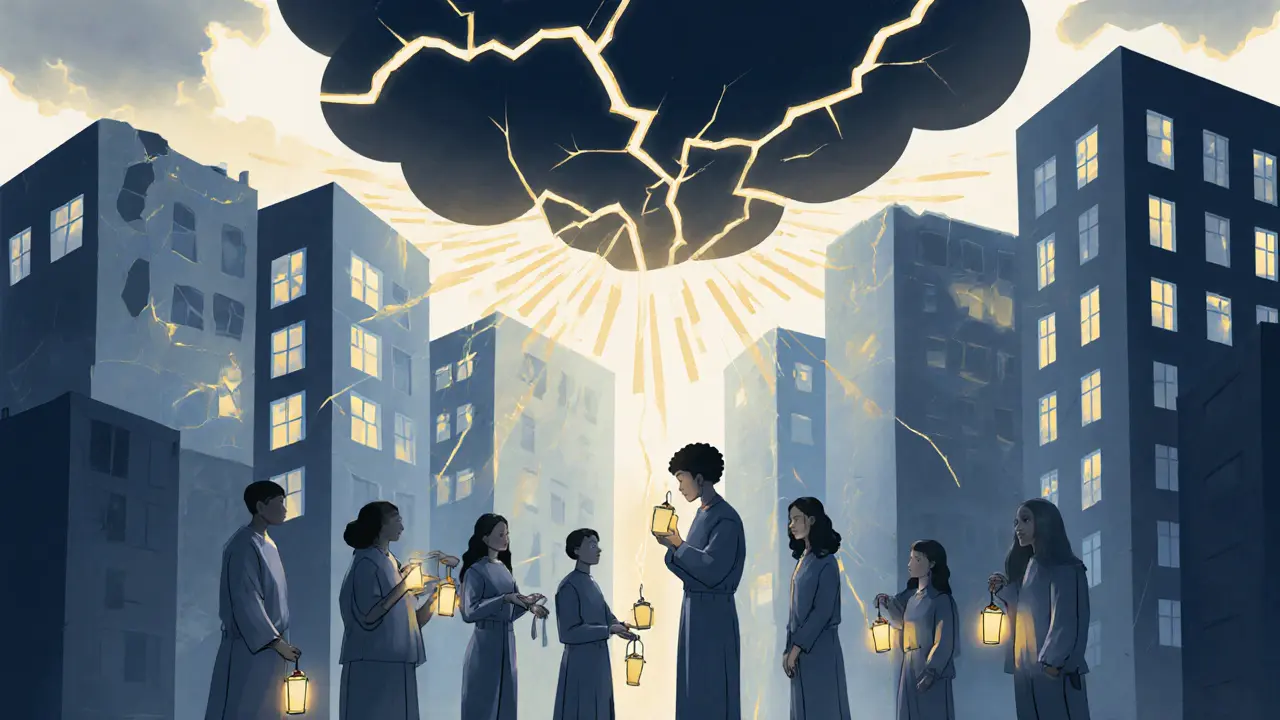
Kolektivní trauma: Jak léčit následky války a katastrof ve společnosti
Kolektivní trauma po válce nebo katastrofě není jen souhrn jednotlivých zranění - je to hluboké společenské zranění, které se přenáší mezi generacemi. Jak ho rozpoznat a léčit - praktické přístupy a pravdy, které se nikdy neřekly.
VÍCE INFORMACÍ